Getting Started with Crypto Safely
Cryptocurrency offers new ways to store and transfer value, but it also requires personal responsibility. This guide explains how beginners can enter crypto safely and avoid common mistakes.
Start with Understanding, Not Money
Before buying or using any cryptocurrency, it is important to understand how the system works. Crypto transactions are irreversible, and mistakes cannot be undone.
Learning the basics first reduces the risk of loss caused by confusion or misinformation.
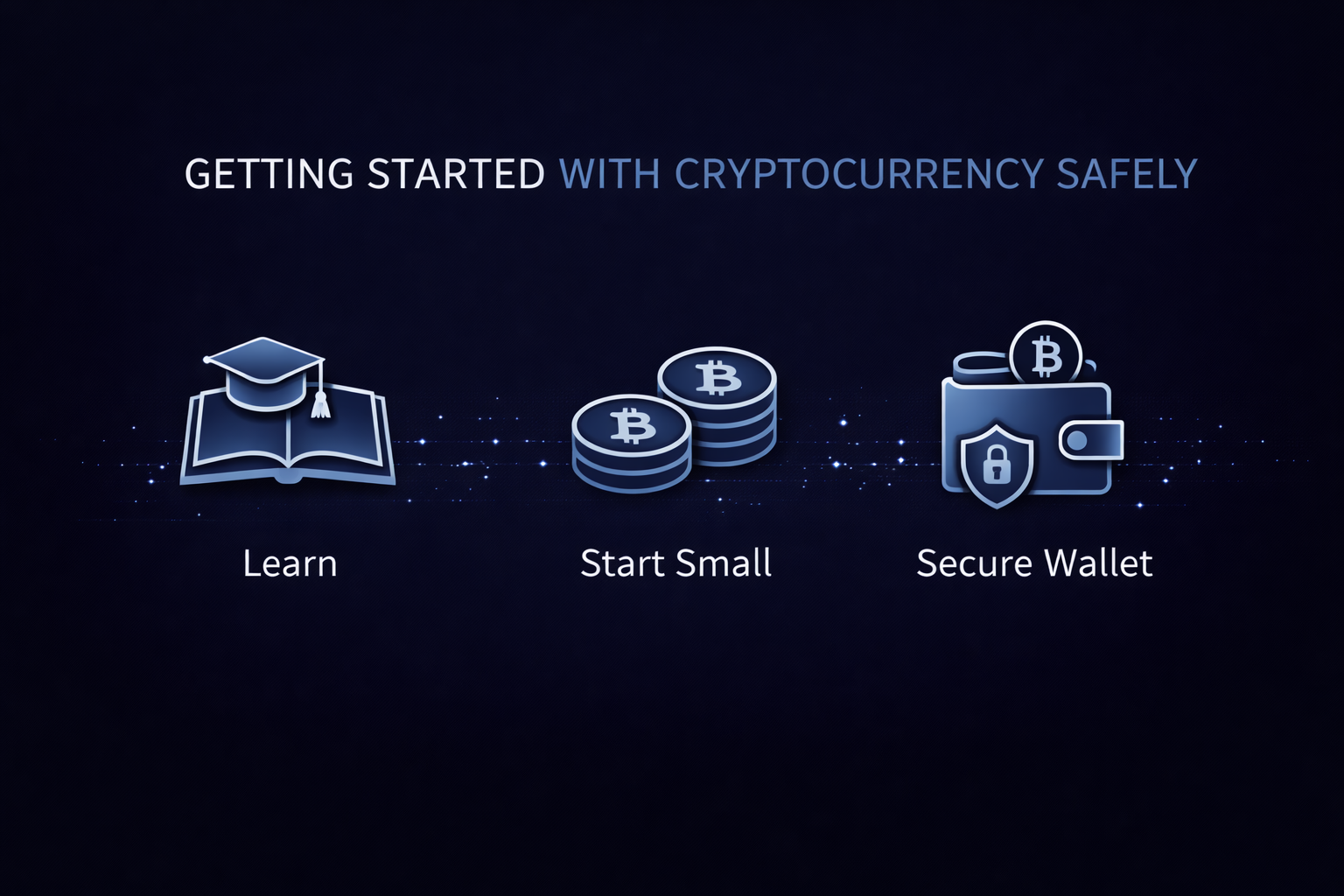
A safe crypto journey begins with education, caution, and proper security practices.
Use Small Amounts Initially
Beginners should always start with small amounts. This allows you to understand transactions, fees, and wallet behavior without risking significant funds.
Treat early activity as practice rather than investment.
Choose Wallets Carefully
A wallet stores the private keys that control access to your crypto assets. If private keys are lost or exposed, funds may be lost permanently.
Beginners should prioritize security, backups, and ease of use when selecting wallets.
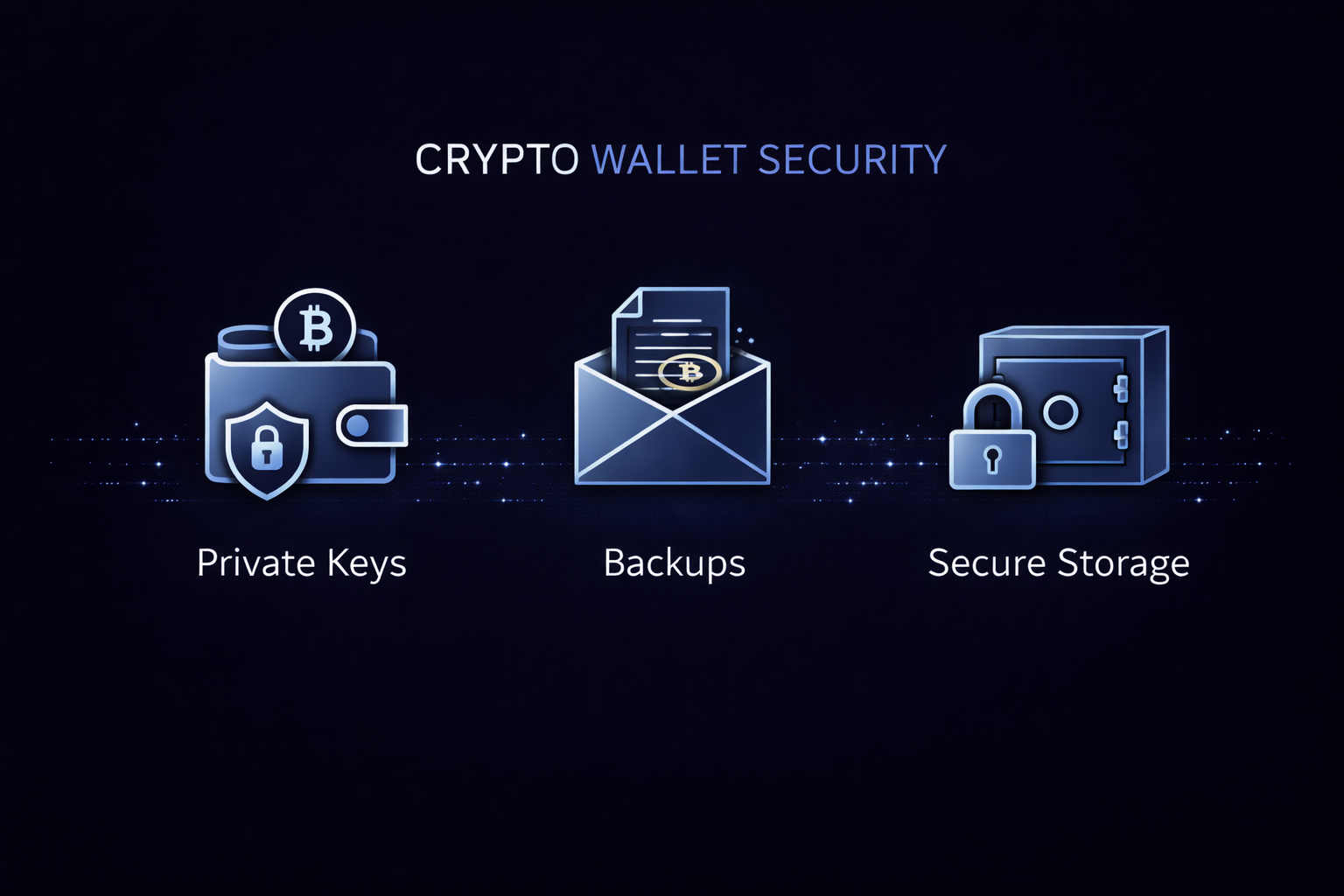
Secure wallets and backup practices help protect digital assets.
Protect Your Private Keys
Private keys should never be shared. No legitimate service will ask for your private keys or recovery phrases.
Storing keys offline and using secure backups can reduce the risk of theft or loss.
Beware of Scams and False Promises
Crypto scams often promise guaranteed returns or urgent opportunities. These are common warning signs of fraud.
Always verify sources independently and avoid pressure-based decisions.
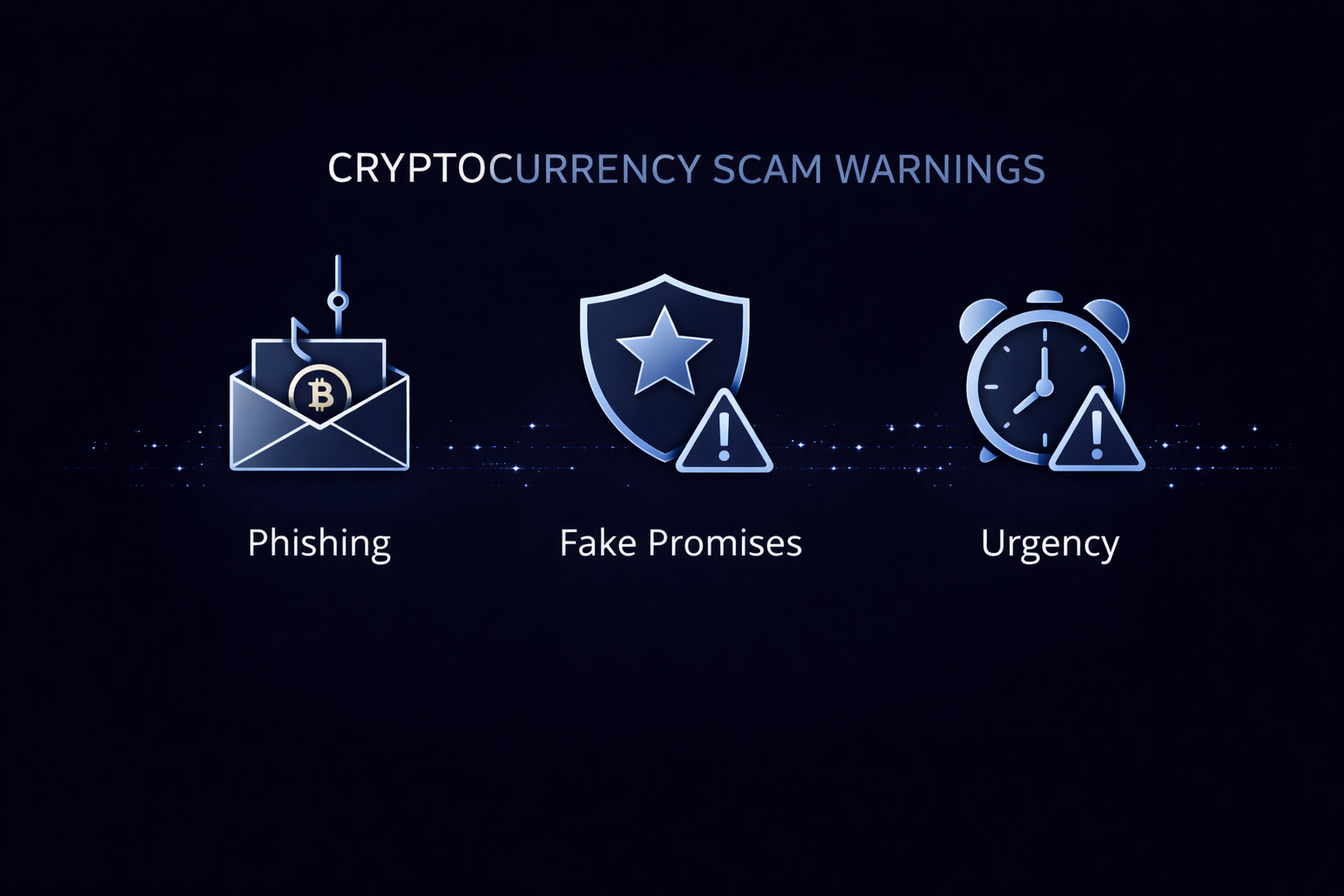
Awareness of common scams helps prevent avoidable losses.
Understand Fees and Network Conditions
Blockchain networks may charge transaction fees that vary based on usage. Sending transactions without understanding fees can result in delays or higher costs.
Key Takeaways
- Start with education before using crypto
- Use small amounts to learn safely
- Protect private keys and backups
- Avoid guarantees and urgent offers
- Security is the user’s responsibility
Disclaimer: This content is for educational purposes only and does not constitute financial advice.
To see how real-world events impact crypto markets, explore our crypto news explanations.