Risks in Crypto Investing
Cryptocurrencies offer innovation and new financial possibilities, but they also come with risks. Understanding these risks is essential before participating in the crypto ecosystem.
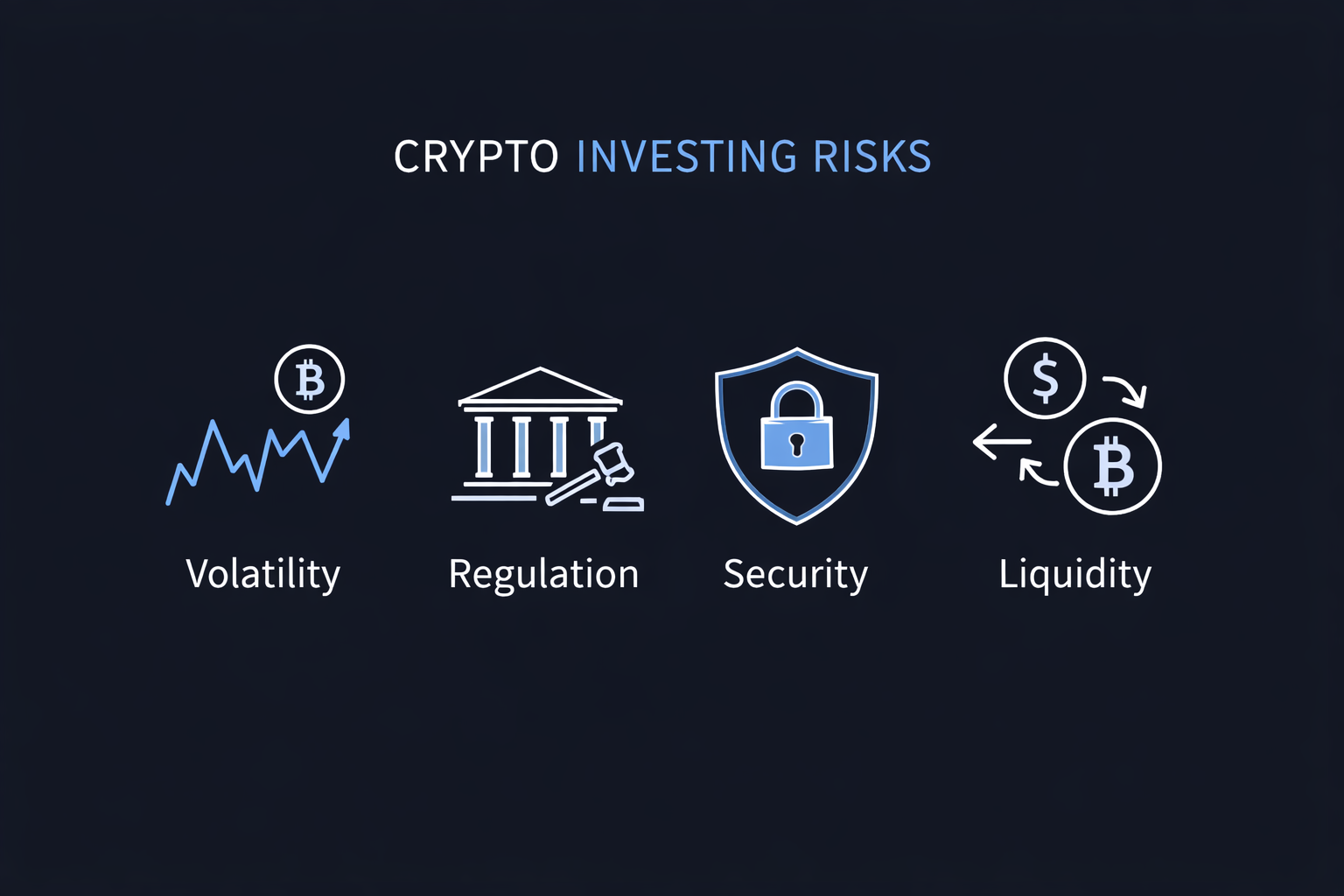
Common categories of cryptocurrency risk: volatility, regulation, security, and liquidity.
1. Price Volatility
Cryptocurrency prices can change rapidly over short periods. These movements are often driven by market sentiment, liquidity changes, regulatory news, or macroeconomic events.
Large price swings can result in significant gains or losses, making crypto assets unsuitable for those who cannot tolerate volatility.

Crypto markets experience sharper price movements compared to traditional assets.
2. Liquidity Risk
Some cryptocurrencies have low trading volume, which can make it difficult to buy or sell assets at expected prices. Low liquidity may increase price slippage during transactions.
3. Regulatory and Legal Risk
Cryptocurrency regulations vary across countries and may change over time. Governments may introduce restrictions, taxes, or bans that affect market access or asset value.
Regulatory uncertainty is an important factor to consider when engaging with crypto assets.
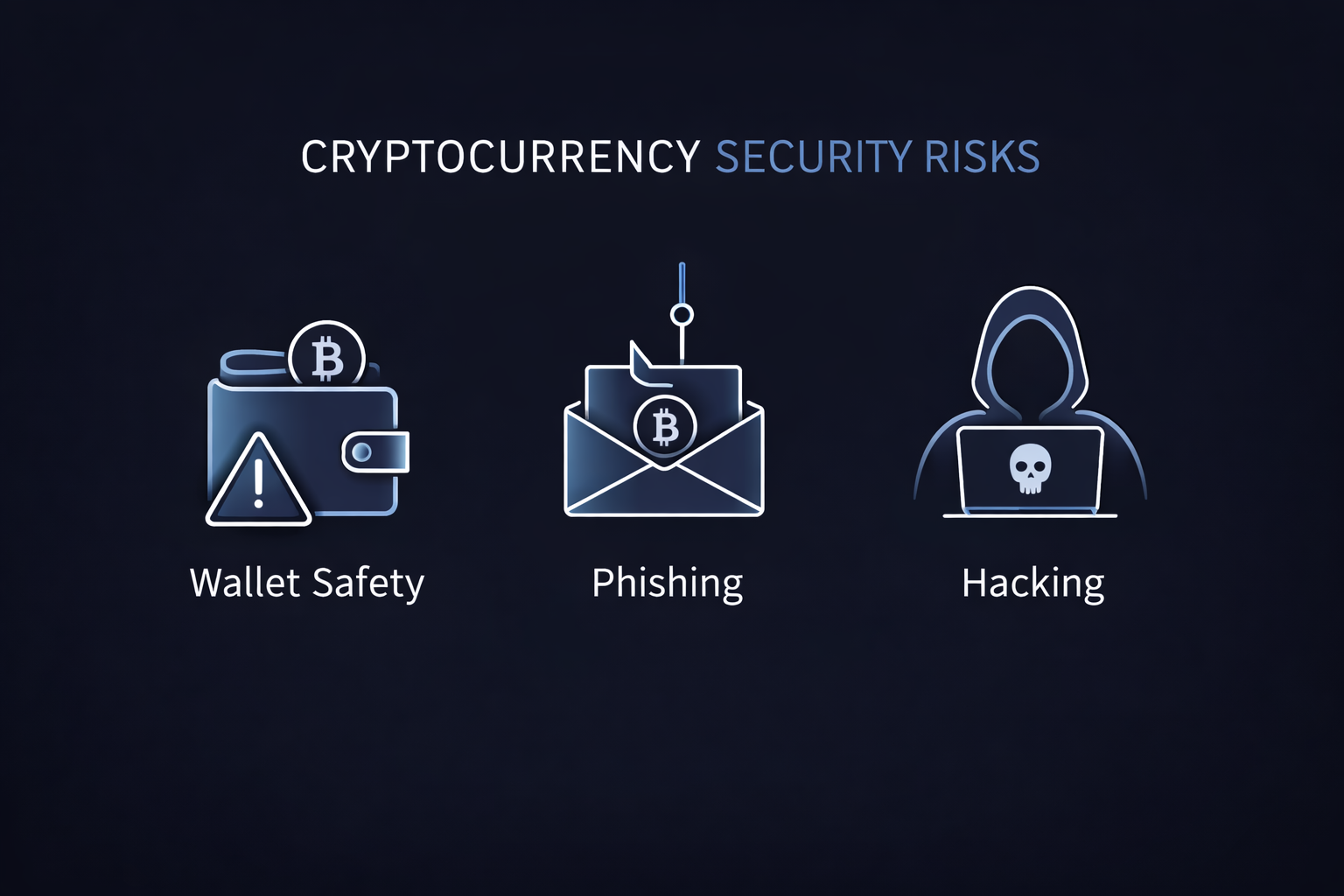
Security risks include hacking, phishing attacks, and wallet mismanagement.
4. Security Risks
Digital assets rely on private keys for access. Loss of keys, phishing attacks, or insecure storage can result in permanent loss of funds.
Unlike traditional banking systems, transactions on blockchains are irreversible.
5. Technology and Network Risk
Cryptocurrencies depend on software and decentralized networks. Bugs, protocol changes, or network failures may impact asset functionality or security.
6. Human Error
Sending assets to incorrect addresses, using insecure platforms, or misunderstanding technical processes are common mistakes among beginners.
How Beginners Can Reduce Risk
- Start with small amounts
- Use reputable wallets and platforms
- Enable security features like two-factor authentication
- Understand the technology before participating
- Avoid promises of guaranteed returns
Key Takeaways
- Cryptocurrency markets are volatile
- Security and regulation play major roles
- Technology introduces both innovation and risk
- Education is the strongest risk-management tool
Disclaimer: This content is for educational purposes only and does not constitute financial advice.
To see how real-world events impact crypto markets, explore our crypto news explanations.